How We Built a Vision Board Together and Why It Worked
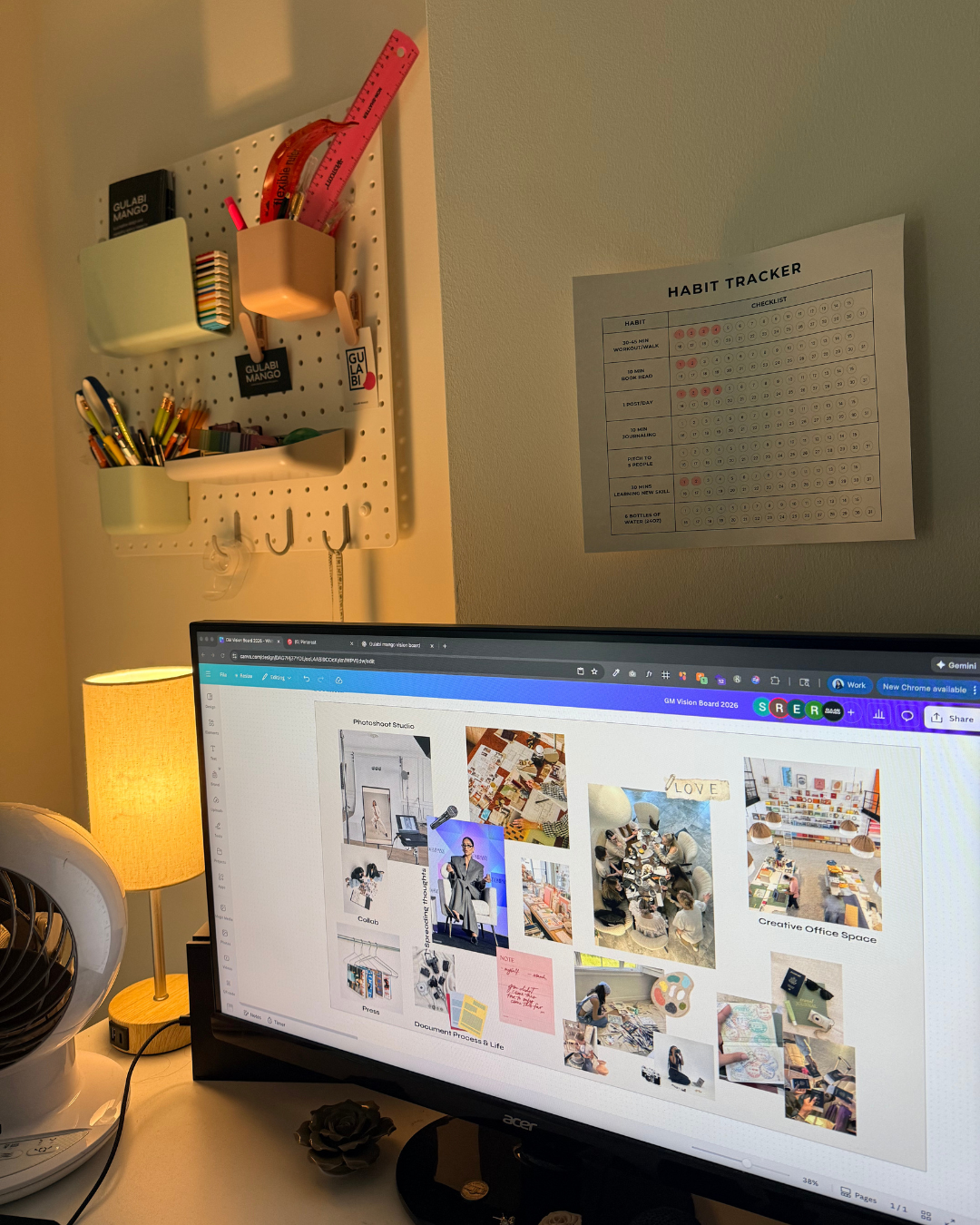
As the year began to slow down, we realized we didn’t want to step into the next one on autopilot. No rushed resolutions, no vague intentions. We wanted clarity as individuals and as a team. So instead of letting the new year arrive with zero perspective, we chose to sit down together and create vision boards for Gulabi Mango, not as participants of the trend, but as a way to align where we’re headed, what we want to build, and how we want to grow.
Before the visuals, the questions
Before we came together on the call, each of us spent time reflecting on our own. We started with questions rather than visuals, taking a step back to understand what the next year could look like for Gulabi Mango and for ourselves within it.
We started with questions, the kind that take a little longer to answer honestly.
Where do we see Gulabi Mango next year?
Which parts of the brand do we feel responsible for nurturing and growing?
What new things do we want to try in our personal fields?
What ideas have been sitting with us, waiting to be implemented?
What do we want to build together as a team, not just professionally, but creatively?
And personally, what skills or spaces do we feel drawn to explore next?
We wrote everything down without polishing it, without filtering it. This step mattered. It helped us understand what was aspirational, what felt immediate, and what felt deeply aligned.
Turning Thoughts into Visuals
Once we had some clarity, we began collecting images that represented our vision. Not just outcomes, but moods, systems, ways of working, and the kind of growth we want to experience. We looked through Pinterest and our phones saving visuals that felt instinctively right rather than overly polished. By the time we came together, each of us already had a structured sense of direction forming.
Building in Real Time
We then met online and opened a shared Canva whiteboard, working on our vision boards at the same time. Each person had their own space on the board, but we were all creating together, in real time. After about thirty minutes, we walked each other through our individual boards.
What stood out immediately was how closely aligned our visions were. Even though each board looked different, the goals behind them felt remarkably similar, the same focus on growth, better systems, deeper creative work, and stronger collaboration, just seen through different perspectives.
From Vision to Action
“There’s no way to know if something will fail unless it’s given the space to exist.”
Once we saw how closely aligned our individual visions were, we brought them together into one collective board for Gulabi Mango. From there, we began breaking that vision down into something more tangible, defining what our vision looks like monthly, quarterly, and over the year ahead. This step helped turn the vision board into something functional rather than decorative. A reference point we can return to, refine, and measure ourselves against as the year unfolds.
“Nothing is too far-fetched when you already have the right people.”
During the conversation, Devanshi shared something that helped ground the moment. Some goals, she said, might feel far-fetched at first, but we’re not as far from achieving them as we think. We already have the right skills and the right team, what matters most is focus and direction.
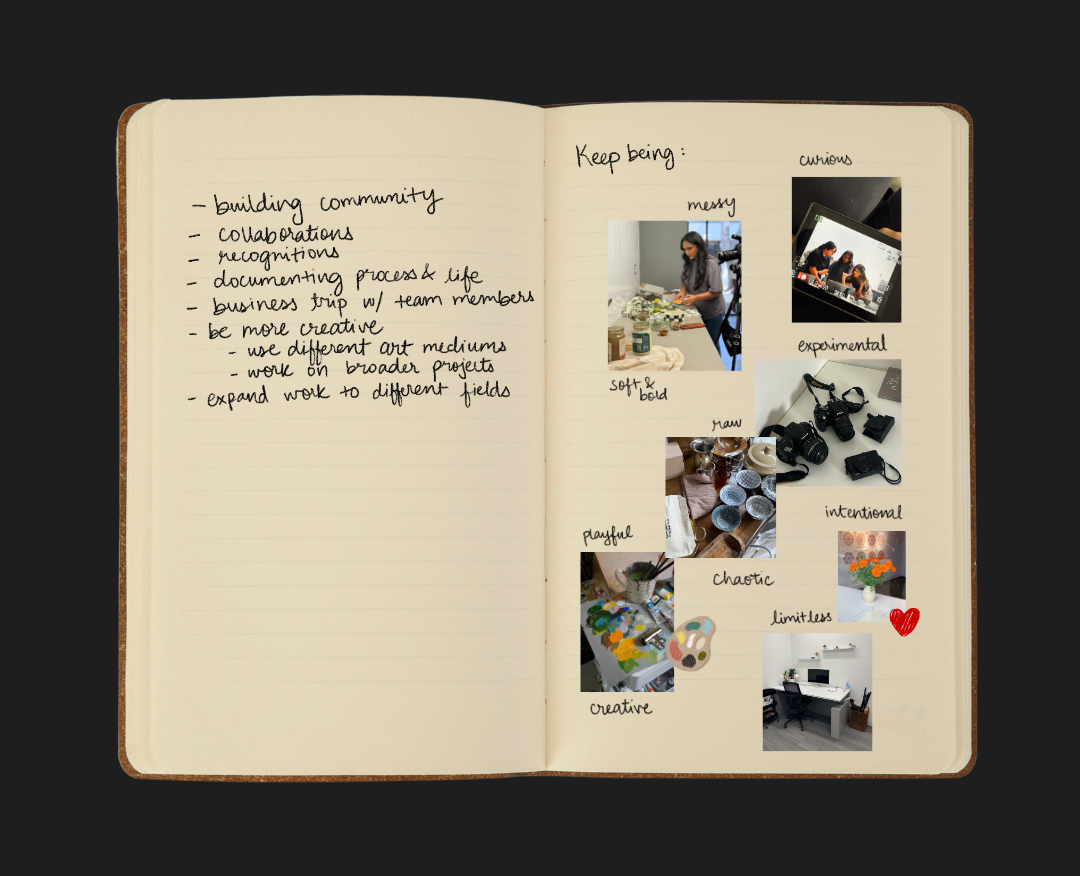
Why Will We Keep Coming Back To This Process Every Year
Looking back, the process reminded us that vision boards work best when they’re built with intention. Taking time to reflect individually before collaborating, creating together in real time, and translating ideas into action made all the difference. For us, this wasn’t just a year-end exercise, it was a way to enter the new year with clarity, alignment, and a shared sense of direction.
Hope you try this with your team, friends or family; and we hope this process works as great for you all as we hope it will for us! Happy Manifesting!
